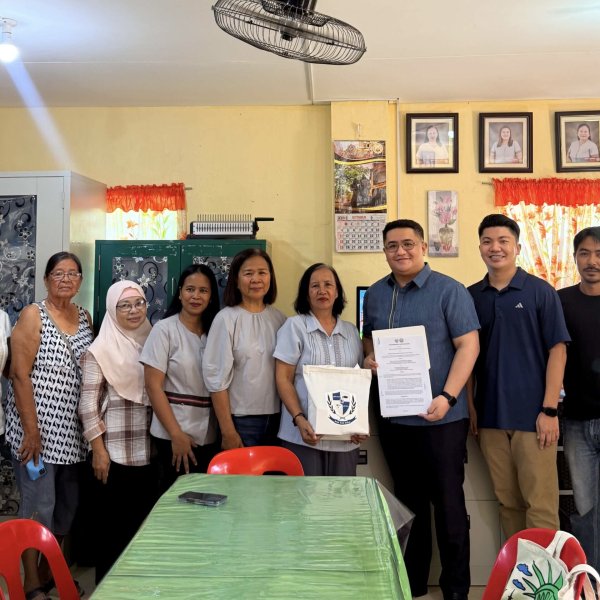


SAN FERNANDO CITY, LA UNION — The Saint Louis College (SLC) School of Advanced Studies (SAS), in partnership with the Northern Philippines College of Maritime, Science and Technology, Inc. (NPCMST), conducted the Project R.I.S.E. (Research Innovation Support Extension) Mentoring Program on August 10, 2026 at the NPCMST Audio-Visual Room.
Carrying the theme “Integrating Instruction, Research and Extension: Advancing Transformative Learning in Higher Education,” the seminar-workshop brought together faculty members and academic leaders to strengthen institutional capacities in the three core functions of higher education—instruction, research, and extension.
Project R.I.S.E. seeks to establish a collaborative and sustainable mentoring ecosystem that enhances faculty and institutional capacities, promotes interdisciplinary collaboration, strengthens transformative learning, and develops evidence-based solutions responsive to community needs. Through the program, participants were equipped with knowledge, skills, and strategies for integrating instruction, research, and extension in ways that are aligned with institutional identity and responsive to societal concerns.
The program also challenged participants to reimagine higher education not merely as the acquisition of knowledge and skills, but as formation for mission. The dynamic interplay of instruction, research, and extension was presented as essential to advancing quality education, community empowerment, sustainable development, and institutional excellence.
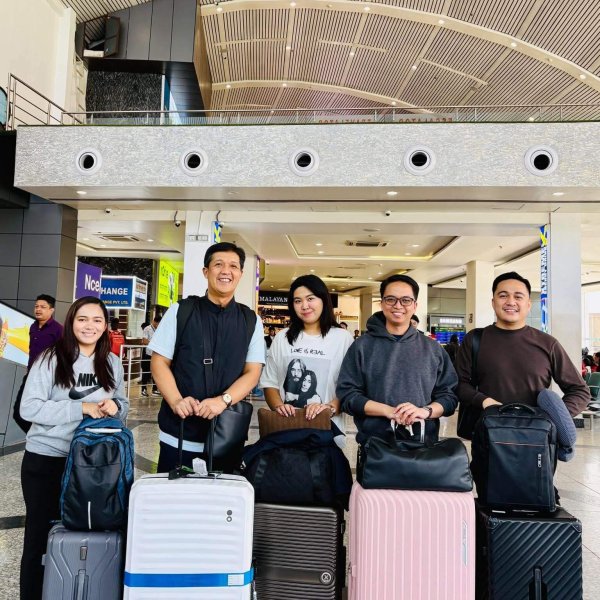
NPCMST President Feban M. Quinto, EdD, through Vice-President for Academic Affairs Dr. Ma. Lourdes Javalde, warmly welcomed the SLC delegation headed by Dr. Jose J. Pangngay, Dean of the SLC School of Advanced Studies.
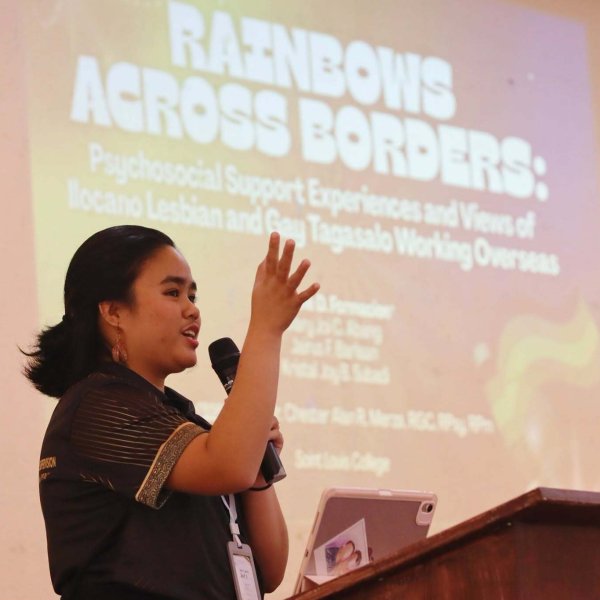
Dr. Leilani O. Sanidad discussed the dynamic interplay of instruction, research, and extension and its contribution to transformative learning. She emphasized that research serves as a foundation for identifying community needs and planning responsive extension programs, while extension brings knowledge into communities and creates opportunities for social transformation.
Meanwhile, Dr. Jose J. Pangngay highlighted research writing, particularly the IMRAD (Introduction, Methods, Results, and Discussion) format, as a framework for producing systematic and publishable research. He also discussed the role of publication in sharing research-generated knowledge and contributing to the broader academic and professional community.
The mentoring sessions were facilitated by faculty members and academic leaders from the SLC School of Advanced Studies:
- Jose J. Pangngay, EdD, PhD, RPm, RPsy, LPT
Academic Dean, School of Advanced Studies - Kathleen Maria V. Dioquino, MLIS, LPT
Program Head, MLIS - Kenneth Mare C. Gangey, MLIS, RL
Librarian, College Library; Faculty Member, School of Advanced Studies - Mark Anthony D. Latoja, PhD, FBE, LPT
Program Head, MBA and PhD - Christopher F. Maynes, MPA, LPT
Department Head, Social Science; Faculty Member, School of Advanced Studies - Kahreen Lou C. Mondina, EdD, LPT
Program Head, MAEd and EdD - Justin Ian N. Ogoy, MAEd, LPT
Research Coordinator and Faculty Member, School of Advanced Studies - Leilani O. Sanidad, EdD, JD
Chair, Research Ethics Committee; Faculty Member, School of Advanced Studies
The Project R.I.S.E. Mentoring Program was initially conceptualized and launched during the First Semester of Academic Year 2024–2025 through the PhM 331 Practicum: Mission and Identity class of the SLC School of Advanced Studies. Since its inception, the initiative has evolved into a collaborative mentoring platform designed to strengthen the capacity of higher education institutions to integrate instruction, research, and extension toward meaningful community impact.
The partnership between SLC and NPCMST reflects a shared commitment to mission-oriented higher education, faculty development, knowledge generation, community engagement, and transformative learning. It likewise supports the quality assurance and outcomes-based directions of Philippine higher education, including the framework articulated in CHED Memorandum Order No. 46, s. 2012, Policy-Standard to Enhance Quality Assurance (QA) in Philippine Higher Education through an Outcomes-Based and Typology-Based Quality Assurance (OBTQA), as well as the broader aspirations of the Philippine Higher Education Reform Agenda and the Sustainable Development Goals (SDGs).
Project R.I.S.E. contributes particularly to the Sustainable Development Goals (SDGs), notably SDG 4 (Quality Education), SDG 9 (Industry, Innovation and Infrastructure), SDG 10 (Reduced Inequalities), SDG 16 (Peace, Justice and Strong Institutions), and SDG 17 (Partnerships for the Goals). Through faculty mentoring, research and innovation, ethical knowledge generation, community-responsive extension, and inter-institutional collaboration, the program advances transformative and mission-oriented higher education toward sustainable development and the common good.
Through Project R.I.S.E., SLC and NPCMST continue to affirm that instruction forms, research informs, and extension transforms—working together to advance higher education that is responsive to the needs of communities and committed to the common good.
Words and photos by the School of Advanced Studies